
Medieval Carpet
A brief history of wool carpets and rugs, and how it compares to today's carpet.
Evan Whitehall
4/9/20264 min read
Medieval Carpet
Imagine life as a peasant in England in 1480.
Life is mostly toil and cold, but you have a few pleasantries and a bit of security in the world.
At least no stranger is coming to harm you. You and your family produce enough cheese and wool to make it to next season and pay the nobles what they demand.Your sparse wool clothing is precious.
It takes nearly two years from shearing the sheep to finishing a piece of clothing. The entire process for one hand-sewn tunic requires over 700 hours of work. (https://www.historic-uk.com/HistoryUK/HistoryofEngland/Wool-Trade/)
Your wool clothes provide insulation from the sideways rain you must endure to tend your flock. Billowing storm winds are blocked with your beeswax-coated cloak, but only if you’re enterprising enough to procure wax during the fall.
No matter what you do, it’s misery being a peasant.
Your imagination would probably drift to a warm home with stuffed furniture covered in fine wool. The floors, too…they’d be covered in the best and softest wool. In your mind’s eye, you’d lay by the hearth with your family, completely dry and comfortable on a wool rug, sipping mead and waiting for a hearty stew to boil.
You’re not royalty, so it remains a fantasy. You’re getting rained on.
But the richest nobles nearby made it happen in their halls. It wasn’t a big deal for a Duke or even an Earl to just take some of your wool and have his people turn it into a warm place to lay by the fire after a stormy hunt.
Carpets and rugs from conquests and gifts covered their cold stone and wood surfaces. The thick fabric dampened the conversations in their meeting halls, improving their comfort and privacy.
Plus, when dignitaries visited it was a big deal to have a carpeted area for another noble to stay in. No visiting scout or diplomat would recommend their king attack another noble that can produce that much wool carpet. If they can produce that much wool, how many swords and arrows could they make?
The only disadvantage to wool was the high cost. But it didn’t cost the nobles anything, just you, the peasant. So, they had wool underfoot in castles and keeps.
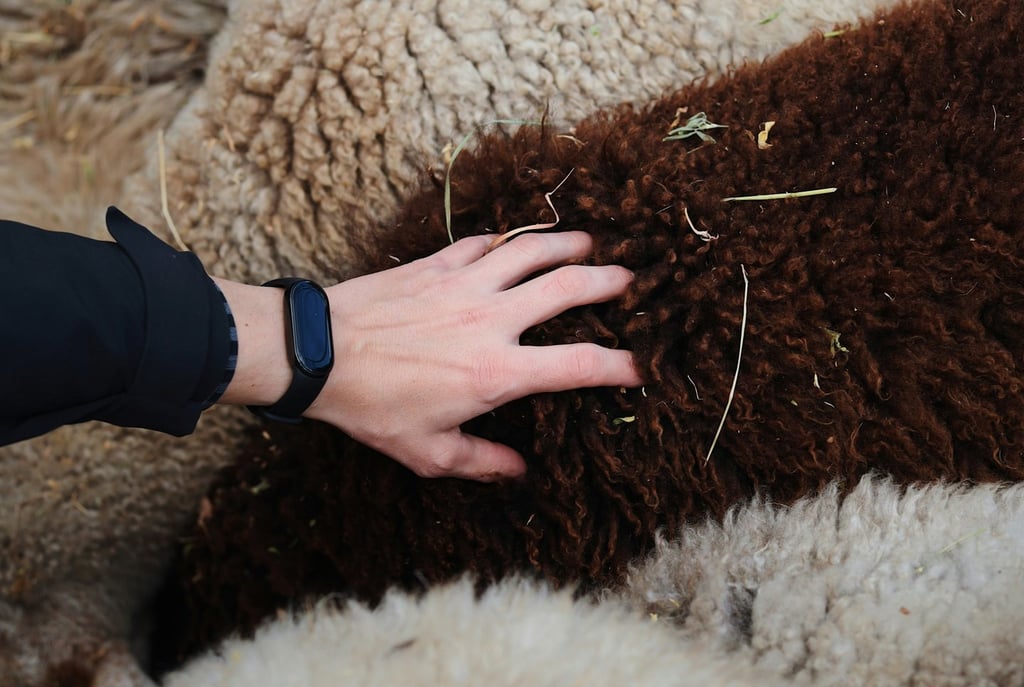
Wool looks and feels posh, it holds dye well, is fireproof, doesn’t shed, and will last nearly forever if cared for properly. Humans have used wool for millenia with no negative impact.
Even today it’s expensive to make wool rugs and carpet. It's still a big flex, too. When someone walks into your home or business and they notice wool carpet and rugs, they reveal themselves to have good taste.
Quality wool is passed down generationally, especially when it’s woven into rugs. That was true in 1480 AD England, 500 BC Persia, and it’s true today.
Wool also provides an indirect physical connection to nature and the celestial. Hear me out:
The sun’s rays (moving through space) hit grass blades, feeding them. The grass feeds the sheep, which grows the wool fiber. Our skin contacts the wool fiber, and we get a fourth-order connection to the sun, a third-order connection to grass, and a second-order connection to sheep.
The people who sheared it, carded it, spun it, and wove are also involved. Sure, technology speeds the wool-making process along nowadays, but it remains complex and labor intensive to make quality wool. Human hands and effort are directly involved. I think it's part of why people still love wool.
Wool carpet is rare to see in homes because of high cost, but casinos pay for it because you can have a cigarette burning on it and it doesn’t erupt into flames. Wool doesn’t burn well, being hair. And it looks amazing when dyed.
Wool continues to be popular among the upper crust of American society, and every other discerning consumer that can justify the cost. Wool rugs and carpets hold their value. If kings ruled the world today, they would still probably choose wool.
Synthetic carpet is everywhere these days, which is both good and bad. Synthetic and plastic materials have transformed our world.
One benefit is that we can all have carpeted surfaces at home and in our businesses. Synthetic fibers like nylon, rayon, polyester, and olefin are easy to produce, install, and clean.
But, synthetic carpet is made of petroleum refining byproducts. Synthetics wear out faster and release materials that may have a negative impact on human health. They also lack that feel that wool and cotton have.
The first synthetic carpets were installed in the 1960’s. Since then, NIH studies (NIH article) have shown negative impacts to the human endocrine system and overall environment when exposed to small synthetic particles.
There are correlative associations with higher cancer rates and exposure to the production of plastics. However, there is no direct link or smoking gun that says synthetic carpet is dangerous as of April 2026.
We still don’t know if synthetic carpet is risky or if it’s harmless to our health. More direct studies of synthetics as a floor material need to be conducted.
Nonetheless, carpet and textile producers have improved some aspects of production, like leaving asbestos, Teflon and other PFAS waterproofing agents out of their products when required to do so. Hopefully this trend continues.
Until then, if you have synthetic carpet in your home like nearly all Americans, don’t worry too much. There are several steps you can take to limit your exposure to microplastics.
Most importantly, don’t leave your carpet dirty. Carpets hide dirt well and it’s a problem…
Each piece of dirt and sand in your carpet is like a knife that cuts the synthetic fibers when you walk on it. The carpet fibers roll around covered in tiny, jagged blades of silica glass. Not only does that agitation wear out your carpet faster, but it can introduce small plastic particles into your home.
So, keep it as clean as possible. Try to take your shoes off and vacuum regularly.
Each year, have a certified carpet cleaning technician do a deep cleaning and steam extraction to ensure your carpet is free from anything that promotes wear.
Some say to take out synthetic carpet from your house and I think they are overreacting...
If you remove abrasive particles regularly, there isn’t going to be much plastic shedding off your carpet. And some synthetics can feel even better than wool, with a comparably beautiful look. Why give that up?
Carpet is a luxury not experienced throughout most of humanity. Keep it clean, and it will serve you well.
And, be grateful it’s not 1480 and you’re not a peasant.